Where Does the Water Go?
FIELD NOTES · ECOLOGICAL LANDSCAPES
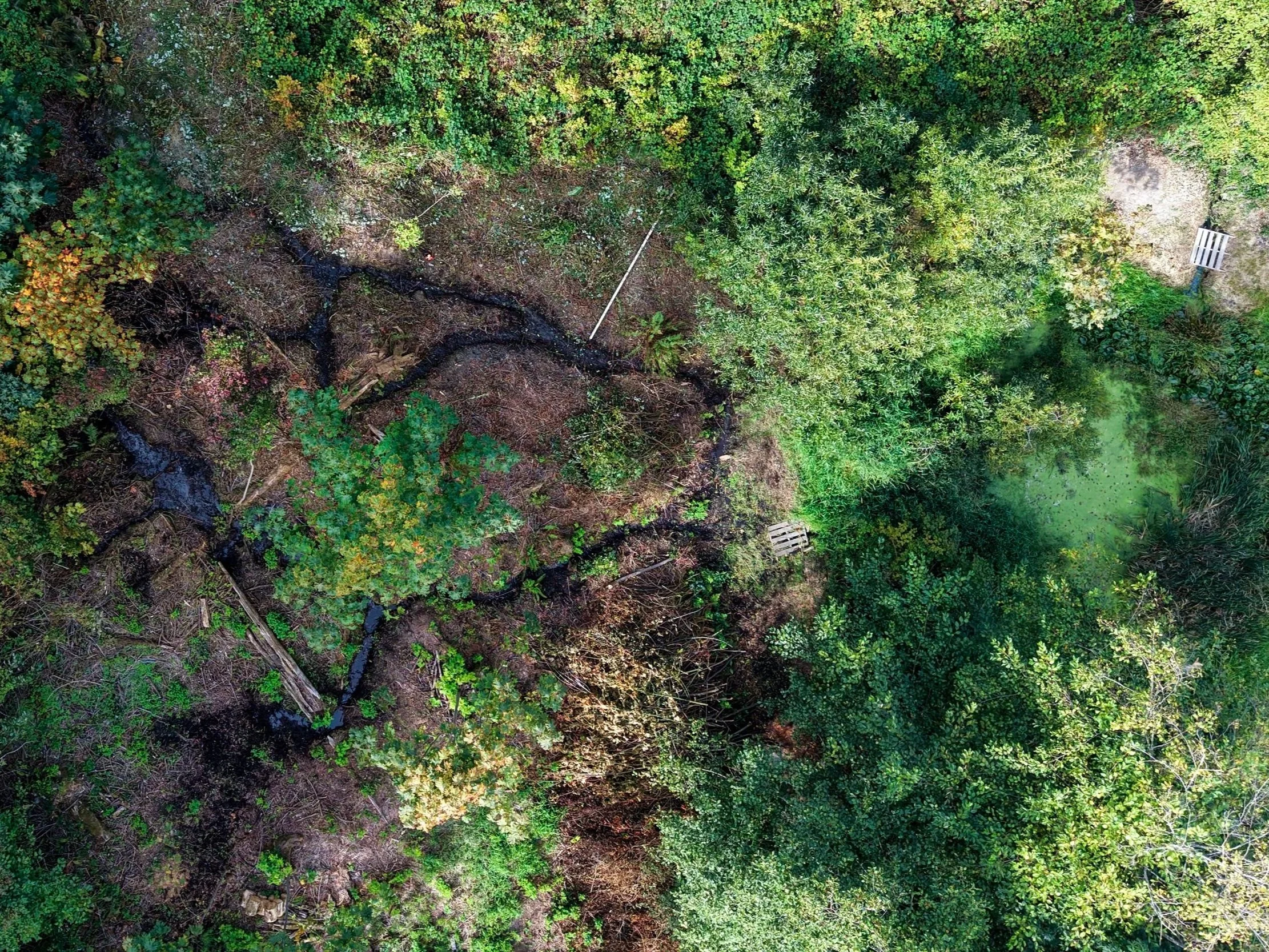
Water is one of the first things we should understand about a landscape.
When we visit a property, we're not only looking at the plants and built features. We're also looking at slopes, soil, roofs, hard surfaces, low areas and the paths water naturally follows.
Because when water isn't understood, landscape problems often follow.
Poor drainage, erosion, saturated planting beds, struggling plants and excessive summer irrigation can sometimes appear to be separate problems. But they may all be connected to how water moves through the property.
Start by observing the land
Before trying to control water, it helps to understand where it already wants to go.
Where does rainfall collect?
Where does runoff from the roof travel?
Does water disappear quickly into the soil, or remain near the surface?
Are there natural depressions or channels?
Does water arrive from neighbouring properties or higher ground?
These observations begin to reveal the hydrology of a site — even at the scale of a residential property.
Soil changes everything
Two landscapes receiving the same amount of rain can behave very differently.
Sandy soils may allow water to move through quickly but can struggle to retain moisture during dry periods. Heavier soils may hold more water but become saturated when drainage is poor.
Compaction adds another problem. Water that might normally infiltrate into healthy soil can instead move across the surface.
That's why adding irrigation or installing a drain without understanding the soil can sometimes treat the symptom rather than the underlying condition.
Slow it. Spread it. Let the landscape use it.
In many landscapes, the objective shouldn't simply be to move water away as quickly as possible.
There may be opportunities to slow water down, allow it to infiltrate and make it available to plants and soil.
Depending on the property, that could mean improving soil, adjusting grades, directing runoff toward planted areas, using vegetation to stabilize soil, creating infiltration areas or reconsidering where impermeable surfaces are necessary.
Sometimes drainage infrastructure is absolutely necessary.
But sometimes the landscape itself can become part of the solution.
Summer water matters too
Water management isn't only a winter issue in Greater Victoria.
Our landscapes experience wet winters followed by comparatively dry summers. That means a landscape should ideally be able to manage excess water during wetter periods while retaining enough moisture to reduce irrigation demands during the growing season.
Healthy soil, mulch, appropriate plant selection and efficient irrigation can all help.
The objective isn't necessarily to eliminate irrigation.
It's to use water intentionally.
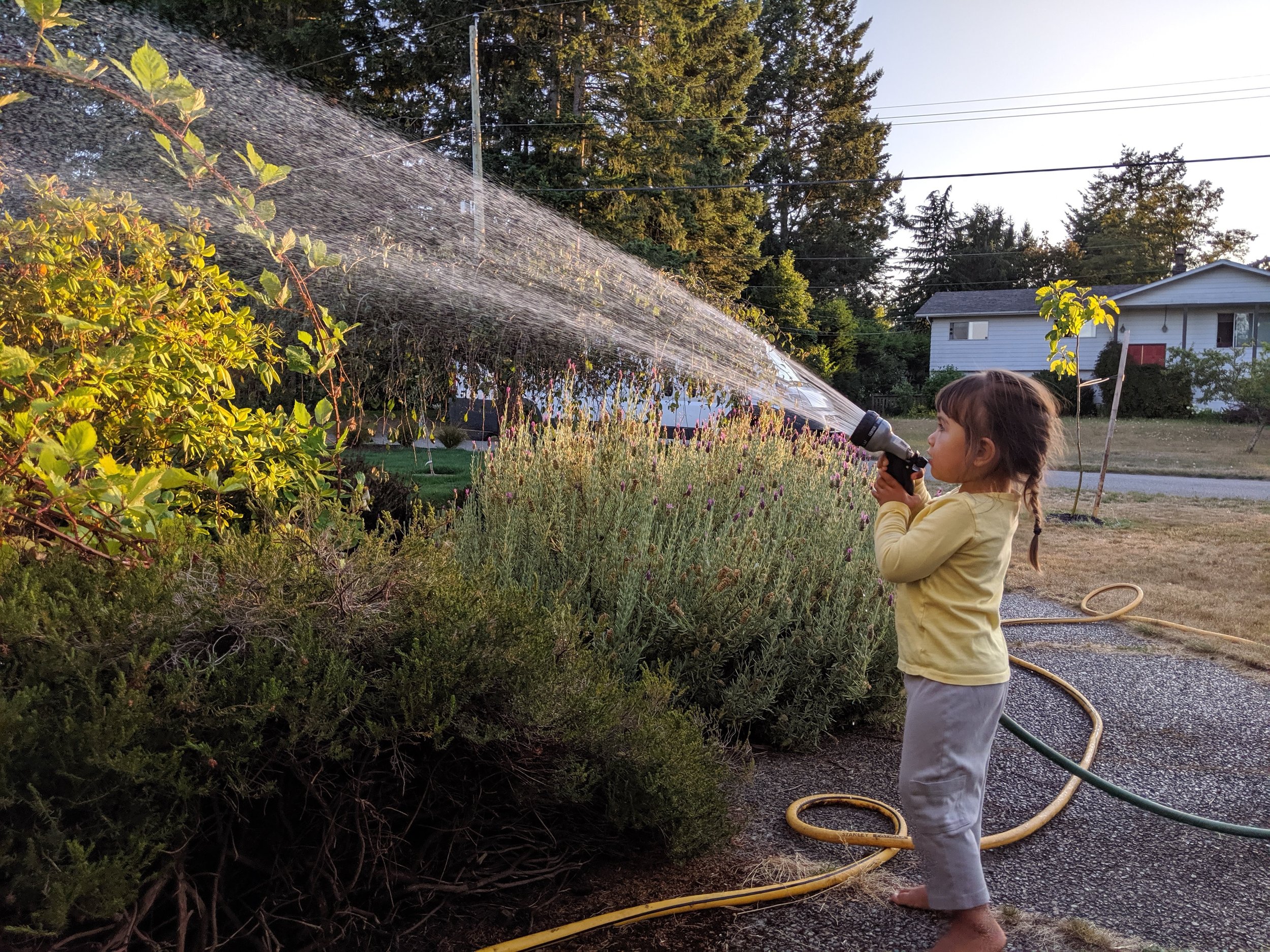
Water is part of how we care for a landscape—not simply something we need to move away.
Water connects the landscape
Once you begin looking at landscapes through the movement of water, many decisions start to connect.
Plant selection affects water demand.
Soil affects infiltration and storage.
Slopes influence runoff and erosion.
Vegetation helps protect soil.
Hard surfaces change where rainfall goes.
Irrigation affects both plant health and water consumption.
Rather than treating each of these independently, ecological landscaping considers them as parts of the same system.
The question isn't simply how we get rid of water.
It's how water can move through the landscape in a healthier way.