Restoration Is a Process, Not a One-Time Project
FIELD NOTES · LAND & RESTORATION
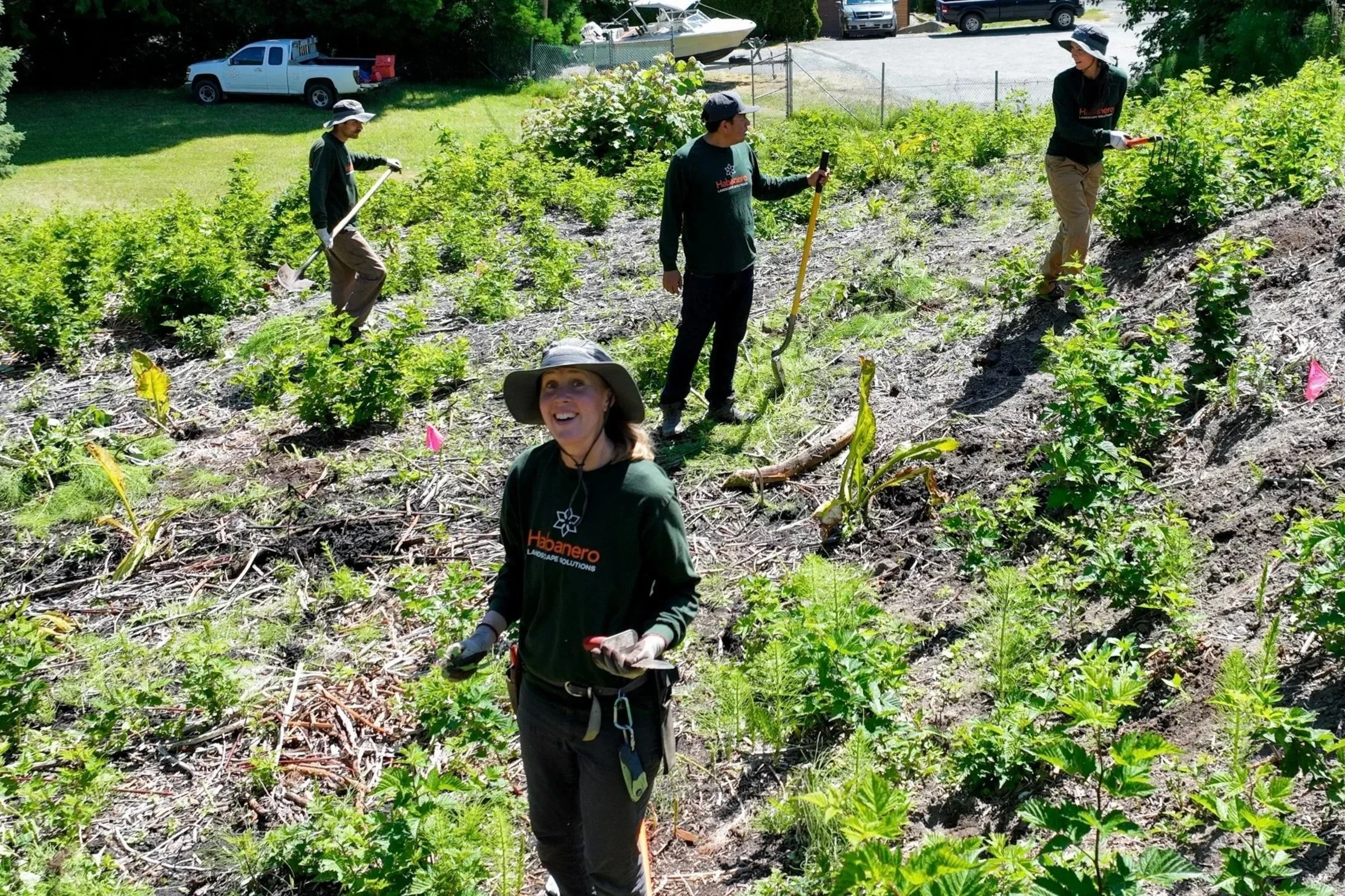
Ecological Restoration - Island View, Saanichton, BC.
When people think about ecological restoration, it's easy to imagine a transformation with a clear beginning and end.
Remove the invasive plants. Add native vegetation. Repair the disturbed area. Finish the project.
But living landscapes rarely work that way.
A restored landscape continues to change after the initial work is complete. Plants establish at different rates. Invasive species return. Water finds new pathways. Wildlife interacts with the site. Seasons reveal conditions that weren't obvious during the first visit.
That's why we think of restoration less as a single project and more as a process of helping a landscape recover over time.
Begin by understanding what is already there
Restoration doesn't necessarily begin with removing everything and starting again.
It begins with observation.
What vegetation is already present?
Which native plants are naturally succeeding?
Where are invasive species dominating?
How does water move through the property?
What areas are disturbed, compacted or eroding?
And perhaps most importantly:
What is the landscape already trying to become?
Existing vegetation, soil conditions, topography and water can tell us a great deal about how a site functions.
The objective is to work with those processes whenever possible rather than unnecessarily replacing them.
Removal is only the beginning
Controlling invasive plants can be an important part of restoration, but removing them doesn't automatically restore an ecosystem.
Once vegetation is removed, the landscape has changed.
There may be exposed soil. Dormant seeds or roots may remain. Sunlight may reach areas that were previously shaded. Other invasive species may take advantage of the disturbance.
That means the question after removal becomes:
What happens next?
Sometimes existing native vegetation can expand naturally. In other areas, planting may help accelerate recovery, stabilize soil or increase biodiversity.
And almost always, the site needs to be observed again.
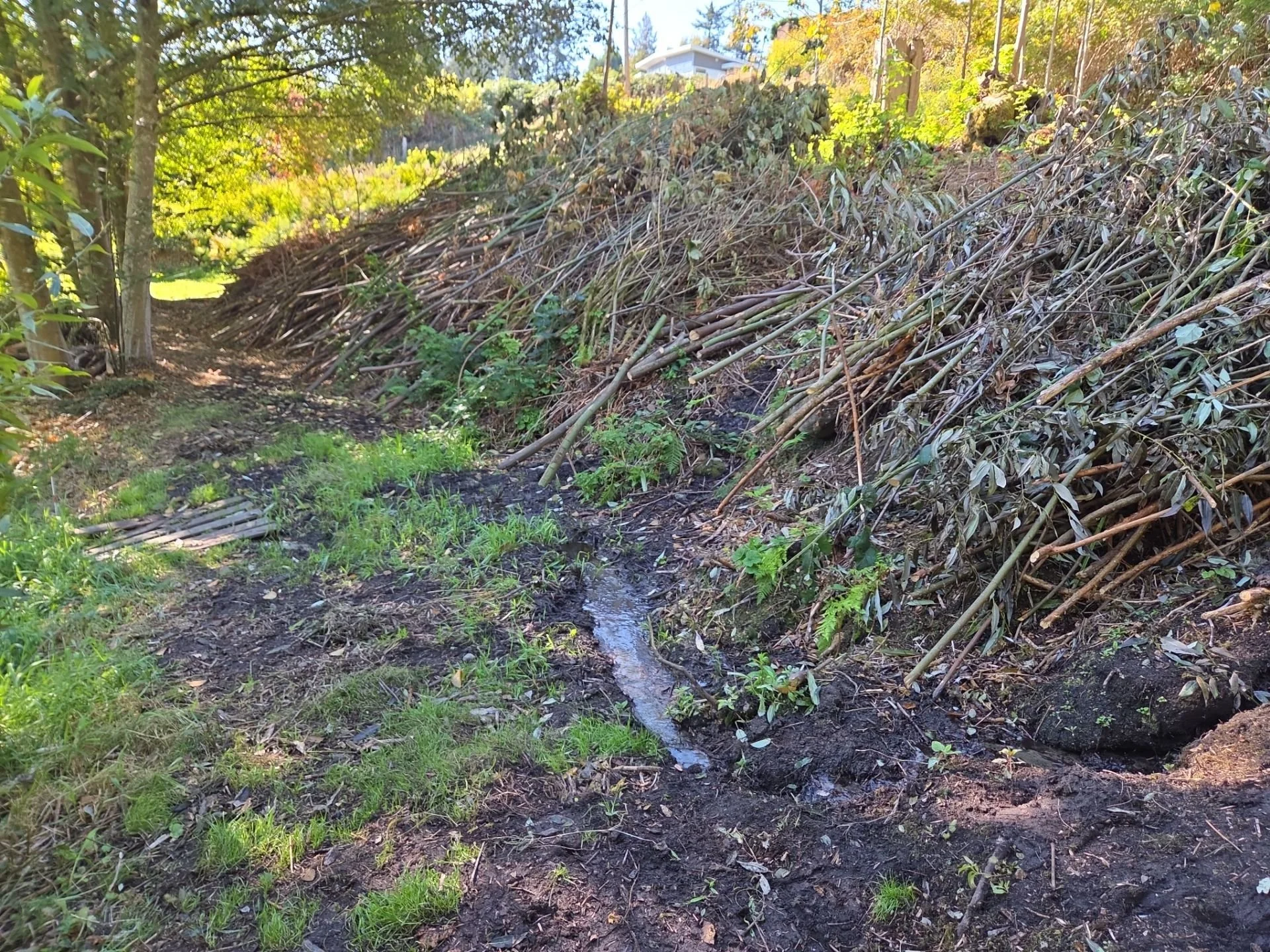
Removal of Vegetation - Ecological Restoration in Progress
Water can reveal how the site works
Water often tells us things about a property that aren't immediately visible.
A dry summer visit might suggest one condition. A winter storm can reveal something entirely different.
Low areas may become saturated. Seasonal channels may appear. Water may arrive from neighbouring land or move through vegetation in unexpected ways.
Rather than immediately trying to redirect every wet area, it can be valuable to understand why the water is there.
In some landscapes, water is not necessarily the problem.
It may be part of the ecosystem we're trying to restore.
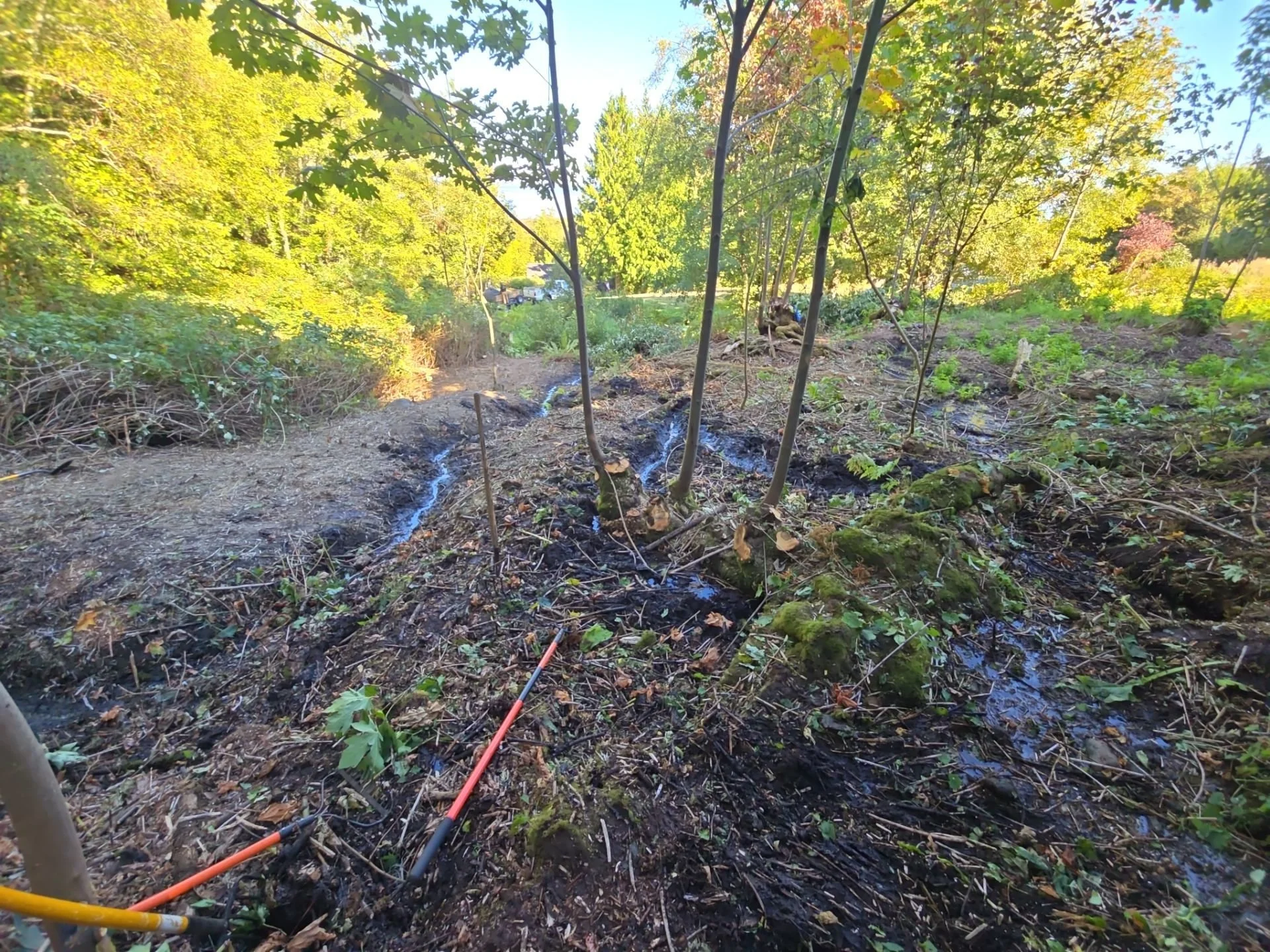
Water Channels - Ecological Restoration in Progress
Work in stages
There can be a strong temptation to create a complete restoration plan before any work begins.
Sometimes that's appropriate.
But complex landscapes can also benefit from an adaptive approach.
An initial phase might focus on invasive-species management and improving access. That work exposes more of the site and makes it easier to understand soil, vegetation and water.
The next phase might introduce planting or erosion-control measures.
Later visits allow us to see what survived, what returned and what the landscape is doing differently.
Each stage gives us more information.
The landscape becomes part of the design process.
Stewardship is what happens after installation
Planting is an important milestone, but it isn't the end of restoration.
Young plants need time to establish. Invasive plants need continued management. Unexpected species may appear. Some plants will thrive while others may struggle.
Stewardship means returning to the site, observing those changes and responding appropriately.
Sometimes that means removing invasive regrowth.
Sometimes it means adding plants.
Sometimes it means doing very little and allowing natural processes to continue.
Knowing when not to intervene can be just as important as knowing when to act.
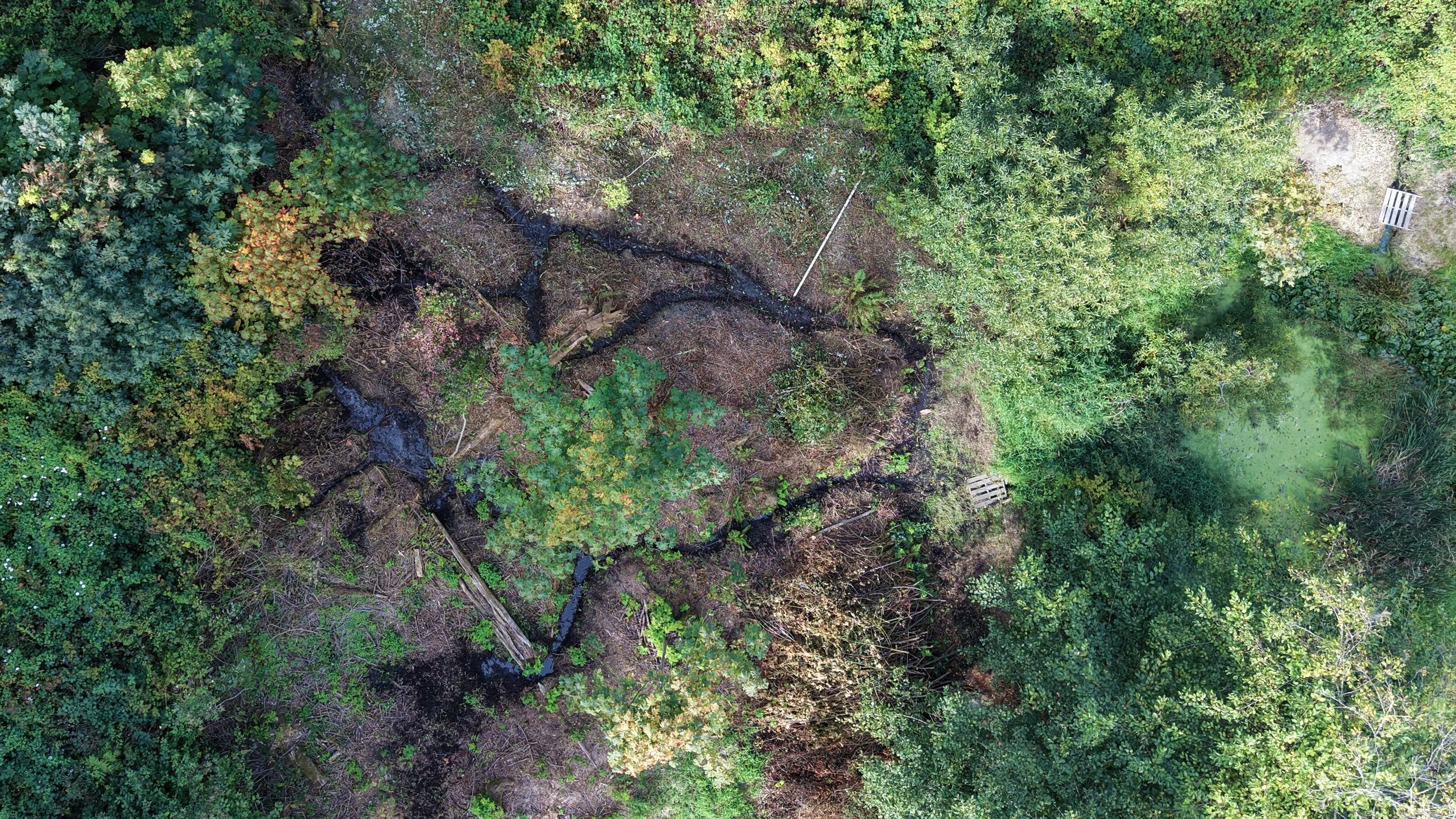
Water Channels 2 - Ecological Restoration in Progress
Success doesn't always look manicured
A restored landscape may not look like a conventional garden.
Leaves and woody material may remain on the ground. Plants may grow into one another. Seasonal wet areas may appear. Some areas may be allowed to regenerate naturally.
That doesn't mean the landscape is neglected.
The measure of success is different.
We can instead ask whether the soil is protected, whether desirable vegetation is establishing, whether invasive pressure is decreasing, whether water is functioning appropriately and whether the landscape is becoming more resilient.
Over time, the objective is for the landscape to require less intervention, not more.
Restoration means building a relationship with the land
Perhaps the biggest difference between restoration and conventional landscape construction is time.
We can't completely control how a living system develops.
But we can observe it, understand it and help create conditions that allow it to recover.
That requires patience.
It requires returning to the site.
And sometimes it requires changing the plan as the landscape teaches us more about how it works.
Restoration isn't simply about changing a landscape. It's about helping the landscape regain the capacity to change and thrive on its own.