What Makes an Ecological Landscape?
FIELD NOTES · ECOLOGICAL LANDSCAPES
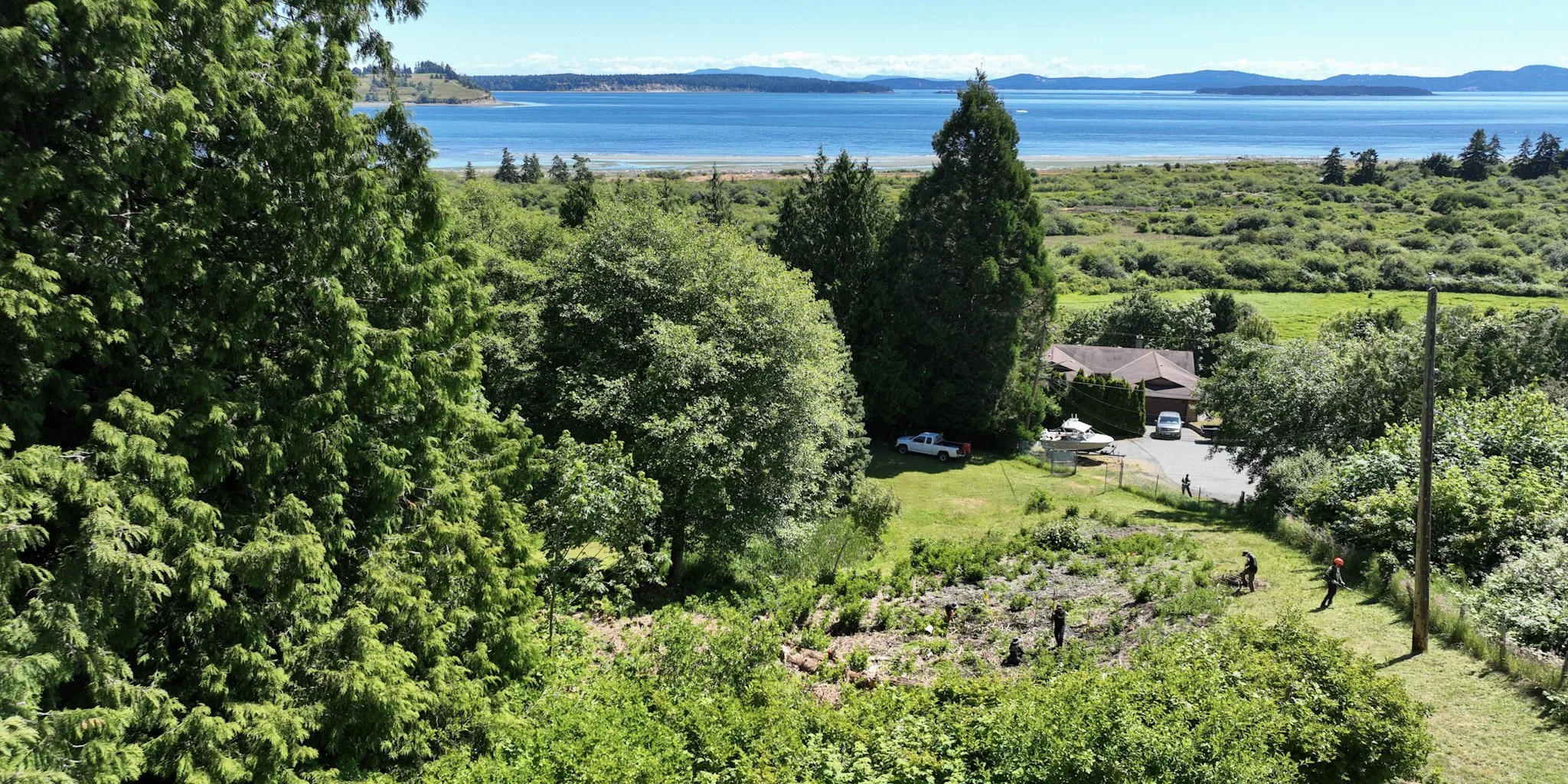
Island View — Saanichton, BC
A landscape doesn’t exist separately from nature. Soil, water, plants, wildlife and people are all part of the same living system.
An ecological landscape begins with that idea.
Rather than approaching a property simply as a collection of lawns, garden beds and built features, ecological landscaping considers how the different parts of a site interact — and how our decisions can help create a healthier, more resilient landscape over time.
It doesn’t mean allowing everything to grow wild. And it doesn’t mean that every landscape needs to become a native plant garden.
It means working with the conditions of the land instead of constantly working against them.
Start with the site
Every landscape is different.
Sun and shade, soil composition, drainage, slopes, existing vegetation, wildlife, exposure and the way people use the property all influence what will thrive there.
Before deciding what to plant or build, we believe it is important to understand those conditions.
Sometimes that means observing where water moves after rainfall. Sometimes it means looking at why plants are struggling, examining the soil, identifying existing species or simply spending enough time on a property to understand how it changes through the seasons.
The landscape often tells us quite a lot when we take the time to observe it.
Healthy soil changes everything
Much of what happens above ground begins below it.
Healthy soil supports plant growth, holds water, cycles nutrients and provides habitat for an enormous community of living organisms.
Instead of relying primarily on fertilizers to keep landscapes looking healthy, ecological care focuses on improving the conditions that allow plants and soil life to thrive naturally.
That can include adding organic matter, mulching, reducing unnecessary disturbance and selecting plants suited to the soil already present.
Over time, healthier soil can also mean a landscape that requires fewer inputs to maintain.
Water belongs in the landscape
Rainwater is often treated as something that needs to be removed from a property as quickly as possible.
Sometimes drainage infrastructure is absolutely necessary. But there are also opportunities to slow water down, allow it to infiltrate the soil and use it as a resource.
Planting, soil improvement, grading, rain gardens and other landscape features can all influence how water moves through a site.
And when irrigation is necessary, efficient systems such as drip irrigation, appropriate zoning and thoughtful scheduling can help deliver water where plants actually need it.
Plant for more than appearance
Plants can do much more than make a landscape beautiful.
They can stabilize soil, provide food and habitat, shade the ground, improve soil conditions, support pollinators and help manage water.
Native plants can be particularly valuable because of their relationships with local ecosystems. But ecological landscaping doesn't necessarily mean planting exclusively native species.
Well-selected adaptive plants, edible plants, herbs and other useful species can also contribute to a diverse and resilient landscape.
The goal is to choose the right plant for the right place — and for the right purpose.
People are part of the ecosystem too
A successful ecological landscape still needs to work for the people who live, work and spend time there.
There may be places where lawn makes sense for children, pets or recreation. Elsewhere, a meadow, groundcover, edible garden or native planting may provide greater value.
Paths, gathering spaces and other built elements can also be important parts of a landscape.
The objective isn't to eliminate human use. It is to find a better relationship between people, place and nature.
Ecological landscapes evolve
Perhaps the biggest difference is that ecological landscaping isn't really about creating a finished product.
Landscapes change.
Plants mature. Soil improves. Water patterns become clearer. Wildlife arrives. Some ideas work better than expected, while others need to be adjusted.
That is why stewardship matters.
Instead of trying to force a landscape to remain exactly as it was on installation day, we can observe how it develops and continue making thoughtful decisions over time.
A different way of thinking about landscaping
For us, ecological landscaping ultimately comes down to a simple question:
How can we care for this place in a way that makes it healthier over time?
Sometimes the answer is a small change — improving soil, changing irrigation or introducing a few better-suited plants.
Sometimes it leads to something much larger: restoring an area, managing water differently, stabilizing a slope or rethinking how an entire property functions.
Either way, the starting point is the same.
Understand the land first. Then decide what it needs.