What Can You Do With a Difficult Slope?
FIELD NOTES · LIVING SLOPES & SITE SOLUTIONS
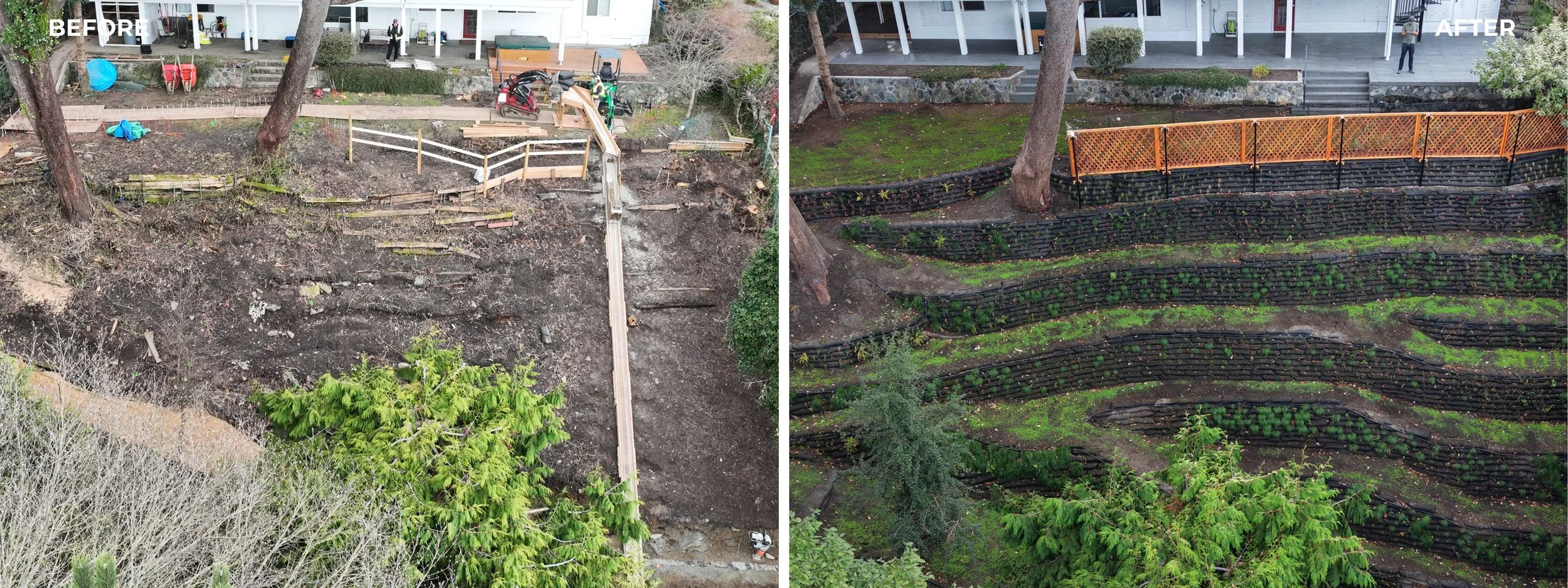
A steep slope can be one of the most challenging parts of a property.
It may be difficult to access, difficult to plant and difficult to maintain. Water can move quickly across it, soil can erode, vegetation may struggle to establish, and in some situations the stability of the slope itself may become a concern.
The instinct is often to ask:
How do we build a retaining wall here?
But that isn't always the first question we should be asking.
A better place to start is:
What is happening with the slope, and what are we trying to achieve?
First, understand the problem
Not every difficult slope has the same problem.
One may simply be too steep to mow safely. Another may experience surface erosion during heavy rainfall. Another may have failing landscape structures, poor drainage or exposed soil.
And sometimes there may be questions about the stability of the land itself.
Those conditions require very different responses.
Before choosing a solution, we need to understand the slope, soil, vegetation, drainage, access and surrounding property.
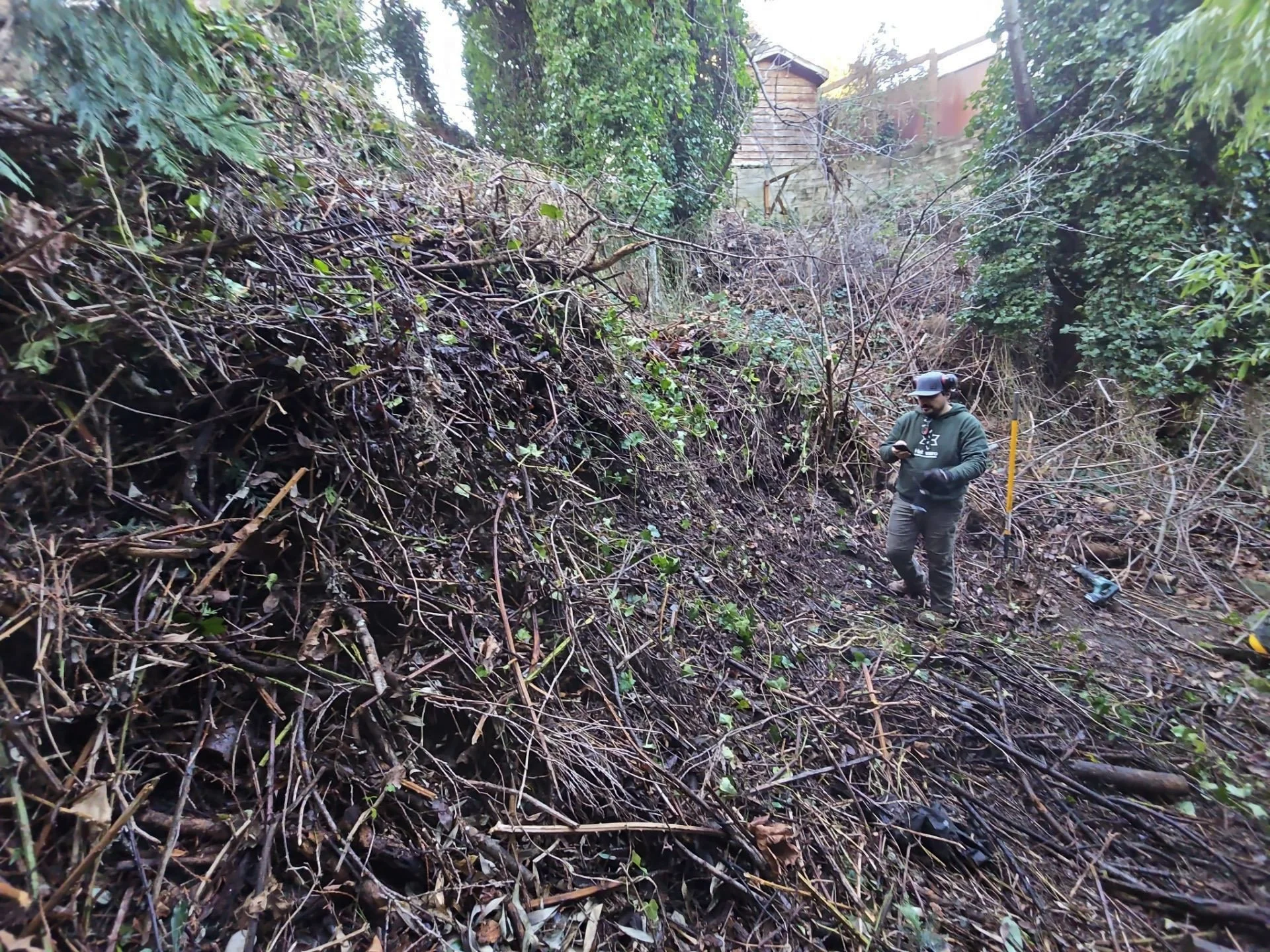
Slope evaluation — Invasive species
Water is often part of the story
Slopes and water are closely connected.
Rainfall and irrigation naturally move downhill. When water becomes concentrated, it can carry soil with it, create channels or contribute to saturated areas farther down the slope.
Bare soil makes the problem worse because there are fewer roots and less vegetation to slow that movement.
Understanding where the water comes from and where it goes is therefore an important part of understanding the slope.
Vegetation can become infrastructure
Plants aren't only decorative elements on a slope.
Roots help hold soil together. Leaves and stems intercept rainfall. Vegetation protects exposed soil and can slow water moving across the surface.
This is one reason ecological slope solutions often incorporate planting as part of the infrastructure itself.
Depending on the conditions, that might include native and adaptive shrubs, grasses, groundcovers or other plants selected for their ability to establish on the site.
The objective is not simply to make the slope greener.
It is to create a landscape that becomes more stable and resilient as it grows.
Sometimes more structure is needed
Vegetation alone isn't appropriate for every slope.
Some sites require grading, drainage improvements, erosion-control systems, terracing or engineered retaining structures.
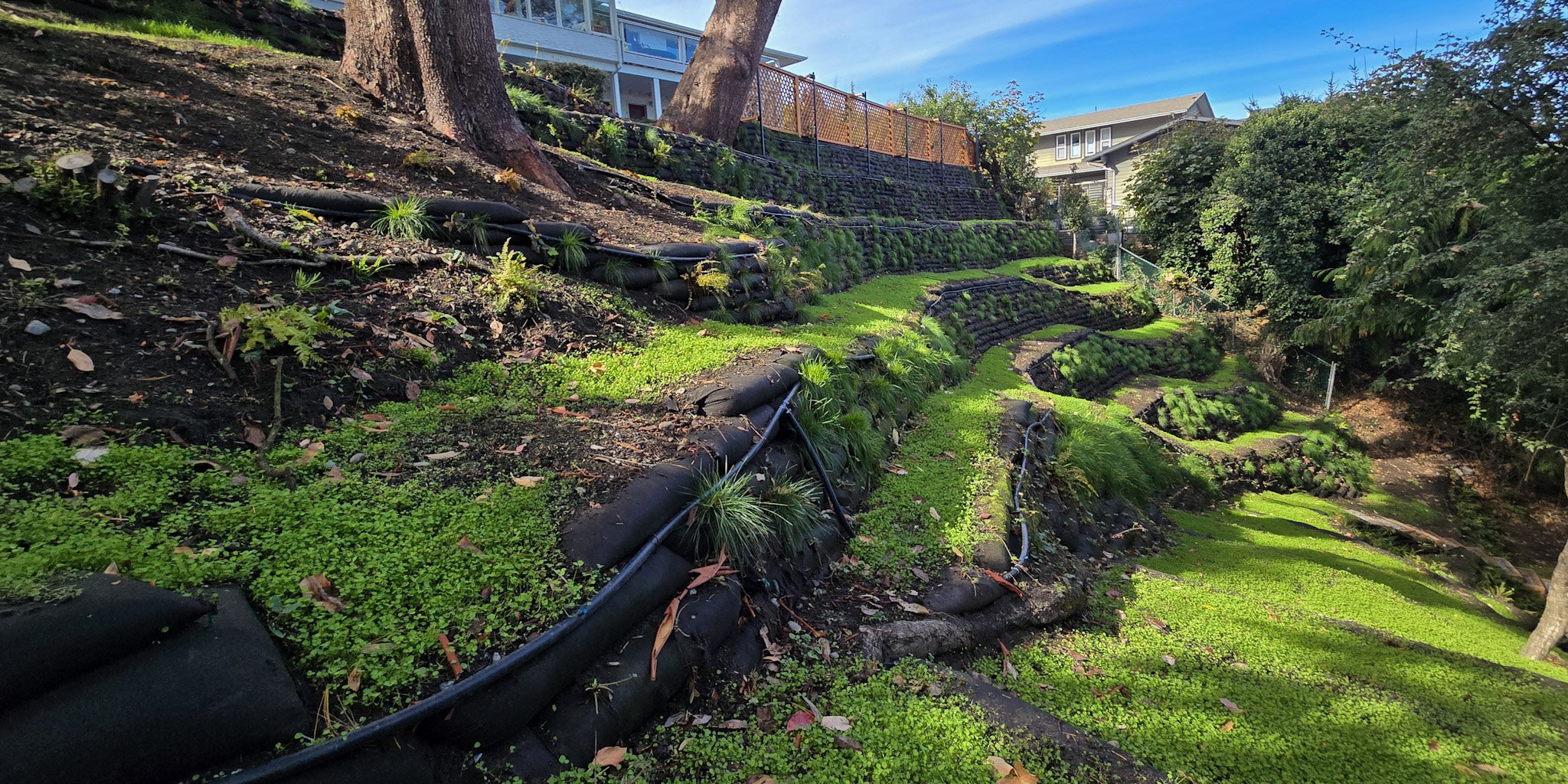
There are also systems such as vegetated mechanically stabilized earth walls, where structural reinforcement and planting work together to create a living slope.
The appropriate solution depends on the conditions of the site.
And when slope stability or structural performance is in question, a geotechnical or other qualified professional may need to be involved before landscape work begins.
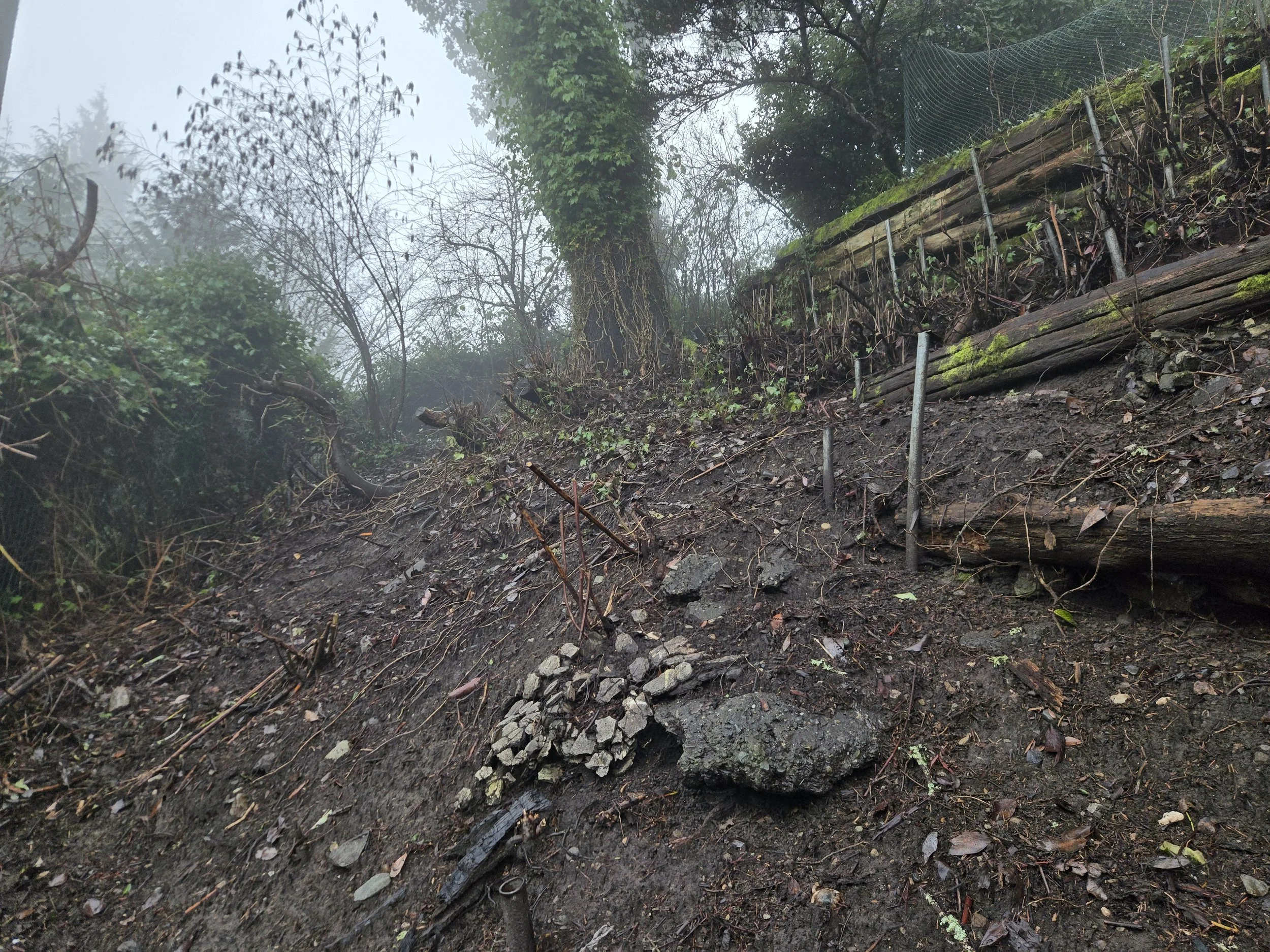
Retaining structure failure — Erosion
Access matters too
One of the most overlooked questions with steep properties is:
How will people actually use and maintain this area?
A solution may need to include steps, trails, terraces or safe maintenance access.
Construction access matters as well. Moving soil, plants and materials on a steep property can significantly affect how a project is designed and implemented.
A good slope solution considers not only how the land performs, but how people interact with it over time.
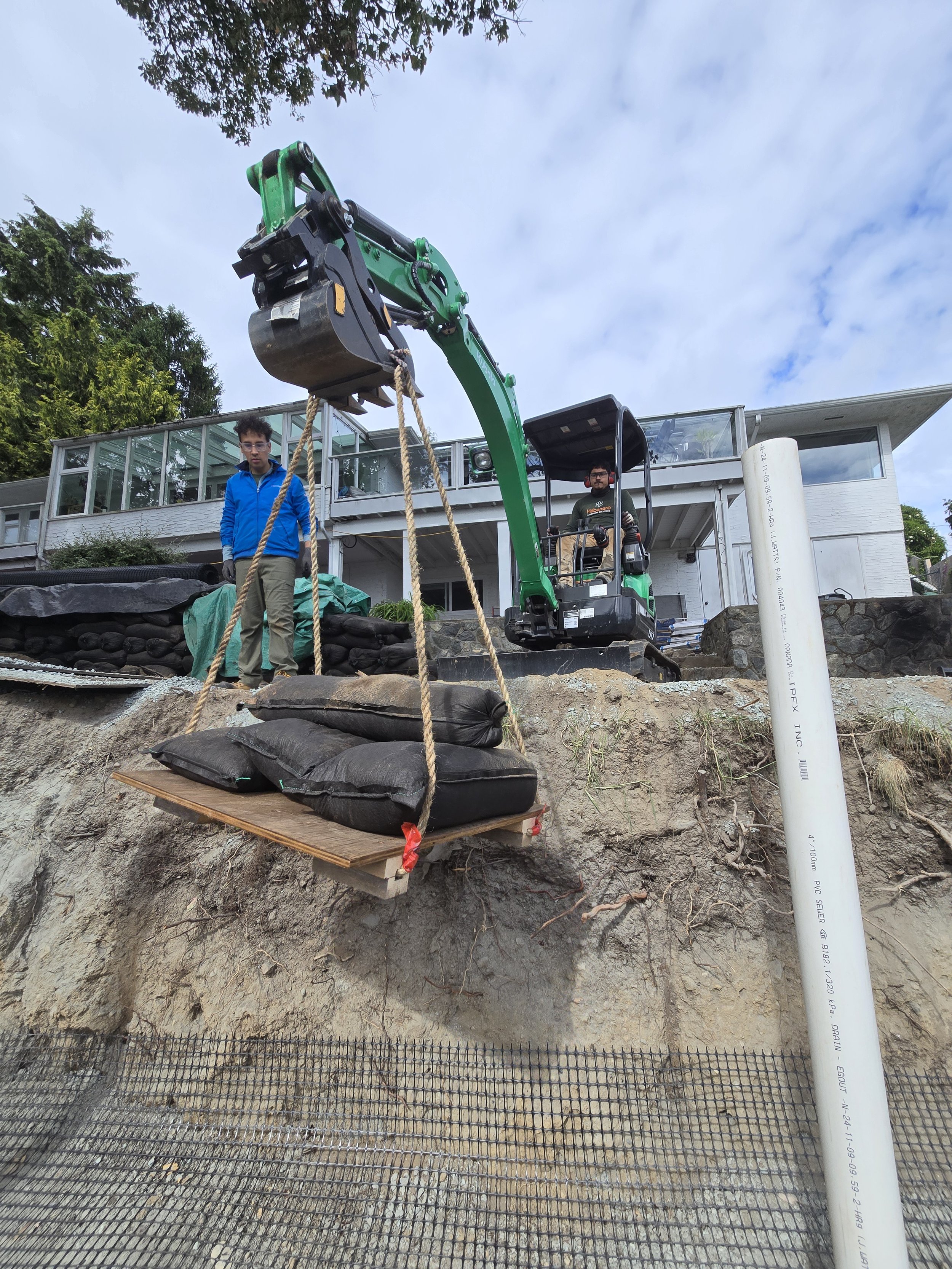
Slope Construction with Flex MSE - Difficult Access
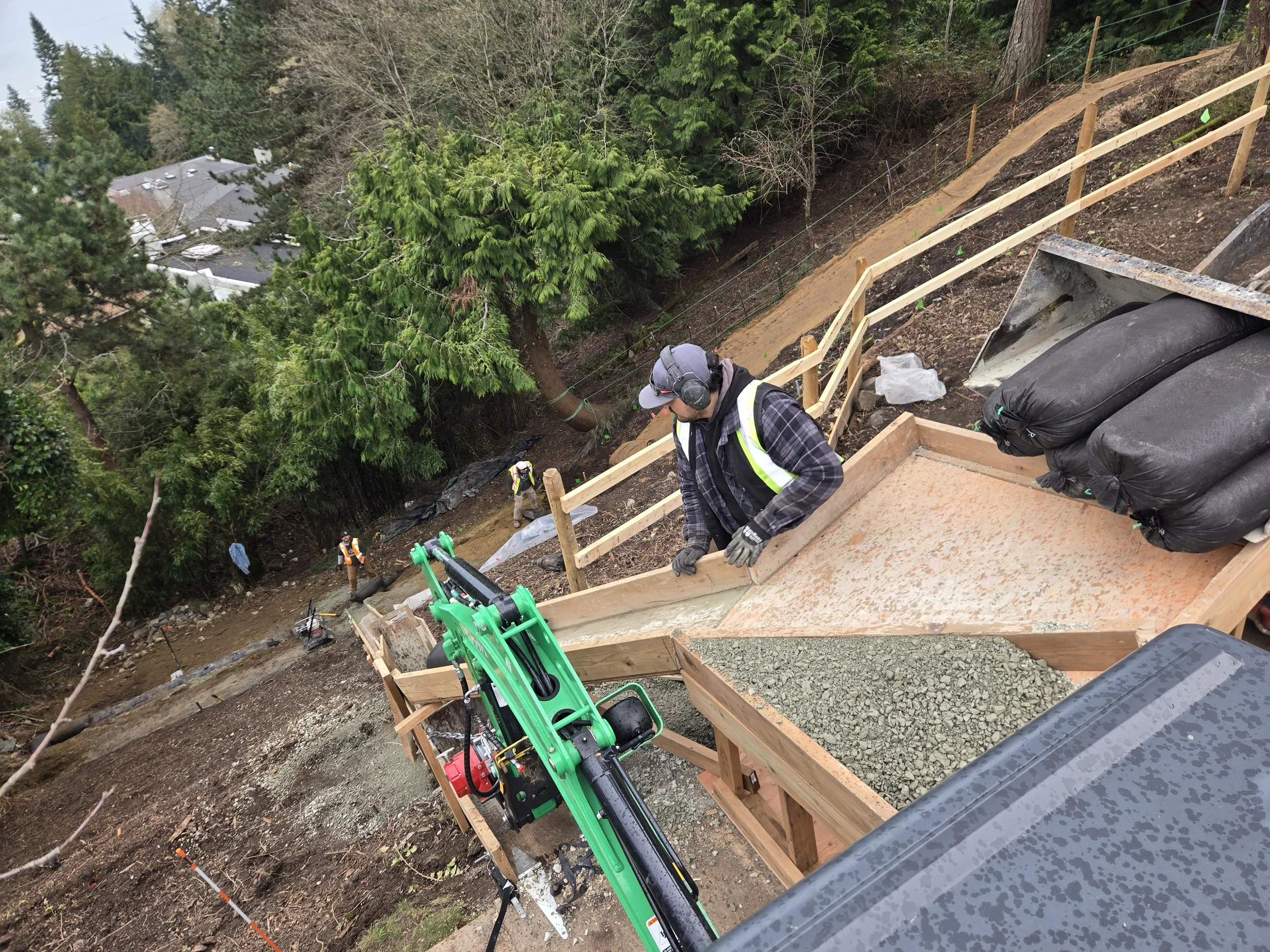
Slope Construction with Flex MSE - Ramp with hydraulic winch
There isn't one solution for every slope
A difficult slope might become a planted hillside.
It might require erosion control.
It might become a series of terraces.
It might incorporate a living retaining system.
Or the best approach might simply be improving vegetation and water management while disturbing as little of the existing slope as possible.
That's why we prefer to begin with the land rather than a predetermined product.
Understand the slope first. Then design the solution around what the site actually needs.