Can We Build Landscapes Better?
Lessons from Georgia Park Terrace: Critical Thinking, Project Management, and Continuous Improvement
Habanero Field Notes | Case Study 01
Greater Victoria, British Columbia | October 2026
At Habanero Landscape Solutions, we believe better landscape solutions begin with better questions.
How can we eliminate unnecessary work? How can a small team perform effectively in a challenging environment? How do we manage uncertainty without compromising quality? And how can we make decisions that create lasting value for people and planet?
These questions became particularly relevant during our Georgia Park Terrace project.
What began as a complex slope-stabilization and landscape transformation project became an opportunity to explore how established management principles could help us work differently.
We didn't set out to implement a particular methodology. We set out to solve problems.
Along the way, we discovered valuable connections between Lean Thinking, Agile Thinking, Project Management, Change Management, and Leadership.
This Field Note shares what we did, what didn't work, and what we're learning about delivering complex landscape projects.
The Challenge: Building on a 38° Slope
Georgia Park Terrace presented significant technical and logistical challenges.
The property featured a steep slope with deteriorating timber terraces, restricted access, and existing ground conditions that required careful consideration.
Our approach involved constructing a series of vegetated retaining terraces using the Flex MSE system, supported by geotechnical expertise, drainage improvements, and landscape enhancements.
But before construction could progress, we needed to solve a fundamental challenge: transporting materials.
The scale was considerable.
The slope reached approximately 38 degrees, and construction required handling approximately 3,235 Flex MSE bags, each weighing 75 pounds.
Together, these bags represented approximately 110 metric tonnes of material.
We also needed to transport more than 75 cubic yards of drainage aggregate, along with construction equipment, timber, rocks, and other materials.
Access added another layer of complexity. Materials needed to travel approximately 179 feet from the front-yard staging area before being transported down an initial ramp approximately 70 feet long.
Moving these quantities through a constrained property required more than additional labour.
It required a different approach.
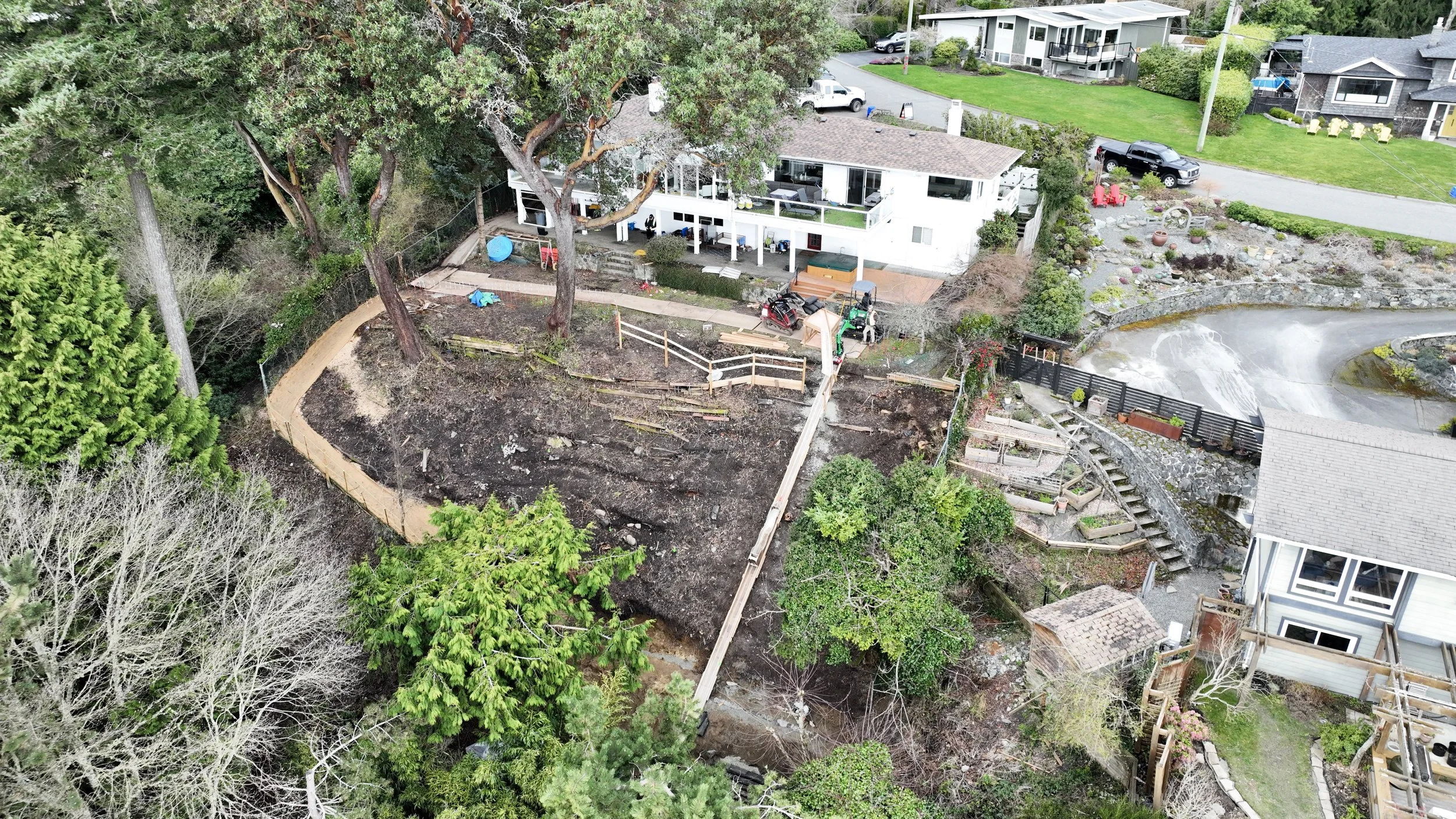
The original slope presented significant challenges involving access, material transportation, drainage, and construction sequencing.
A More Thoughtful Way to Build Landscapes
As we reflected on the project, we recognized that many of our decisions were informed by principles associated with established management disciplines.
Lean Thinking encouraged us to question waste and improve efficiency.
Agile Thinking encouraged adaptability, experimentation, and learning.
Project Management provided structure, risk management, and accountability.
Change Management helped us maintain stakeholder alignment as requirements evolved.
Leadership & Collaboration enabled us to establish direction, empower our team, and coordinate specialized expertise.
These principles are not new, and we're not claiming to have invented a methodology.
Our interest lies in applying critical thinking and established knowledge to the unique challenges of landscape construction and ecological restoration.
We have begun organizing these ideas into an emerging framework, with Critical & Systems Thinking as its foundation, Continuous Improvement as an ongoing practice, and People & Planet at its center.
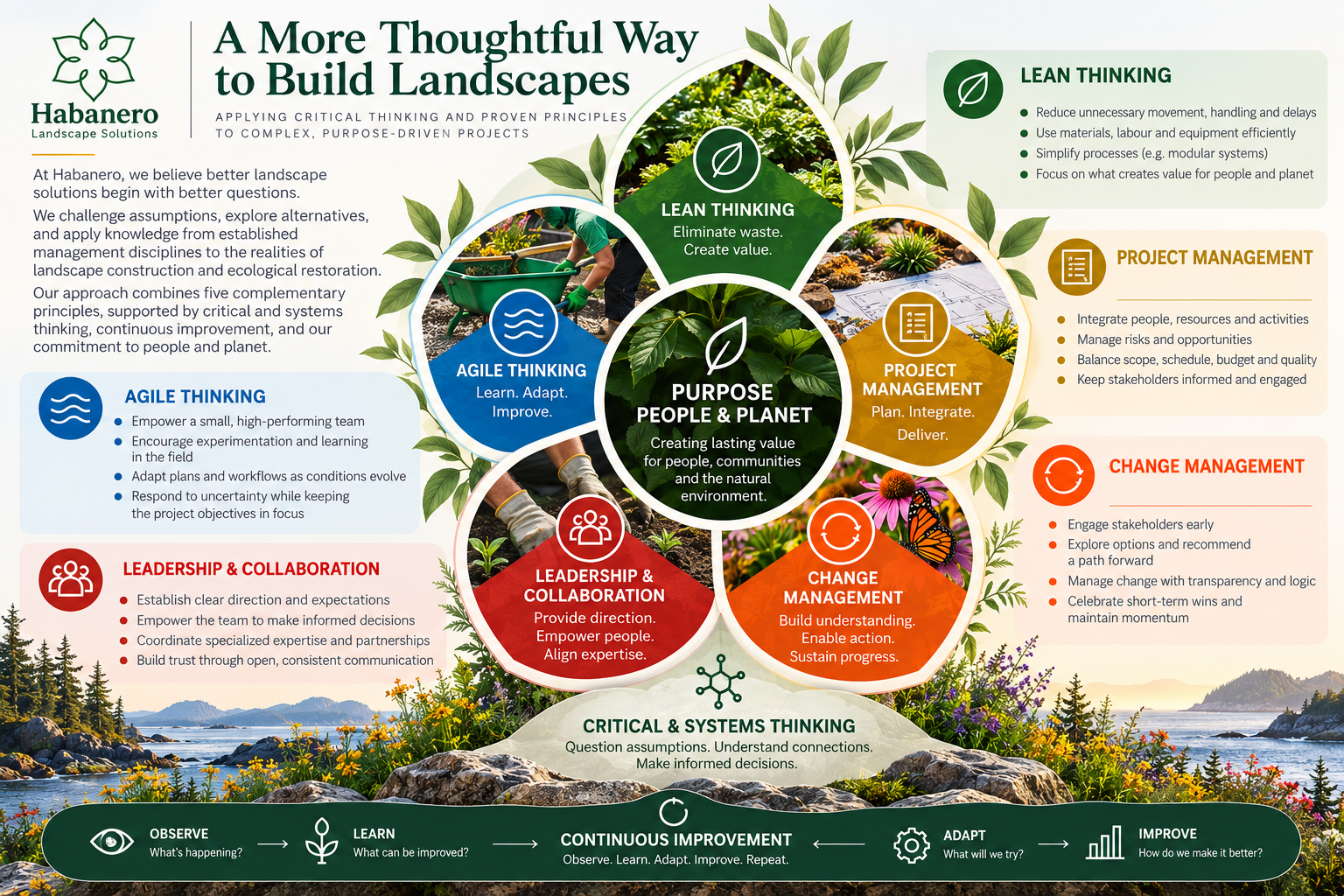
Our emerging approach combines five complementary management disciplines, guided by critical thinking, continuous improvement, and our commitment to people and planet.
Georgia Park Terrace offers our first opportunity to examine how these principles work together in practice.
Lean & Agile in Action: Designing a Better Material Flow
One of our first questions was simple:
How can we move thousands of bags down a steep slope while minimizing unnecessary handling, transportation, and physical effort?
We developed a material-handling system combining a Toro Dingo TX1000, an upper receiving station, a modular ramp, a purpose-built sled, and a hydraulic winch operated through a Kubota mini-excavator.
The Dingo transported materials approximately 179 feet from the front-yard staging area to the upper receiving station.
From there, materials were transferred onto the sled and lowered approximately 70 feet along the ramp.
A crew at the lower end received the materials and positioned them near the active construction area.
Understanding the Process
Each Dingo load carried approximately six bags, or 450 pounds.
Using the equipment's operating characteristics and our estimated handling times, we calculated an initial theoretical transportation cycle of approximately 8 minutes and 21 seconds per load.
This represented a modeled capacity of approximately 43 bags per hour.
These figures were planning estimates rather than measured production results. Actual performance depended on site conditions, material handling, crew coordination, and construction requirements.
Nevertheless, the exercise helped us understand the system's capacity and identify potential inefficiencies.
An important operational decision was to use one operator for both the Dingo and the winch rather than dedicate separate operators to each machine.
The objective wasn't to keep every piece of equipment operating continuously.
It was to use our available resources effectively while maintaining material flow.
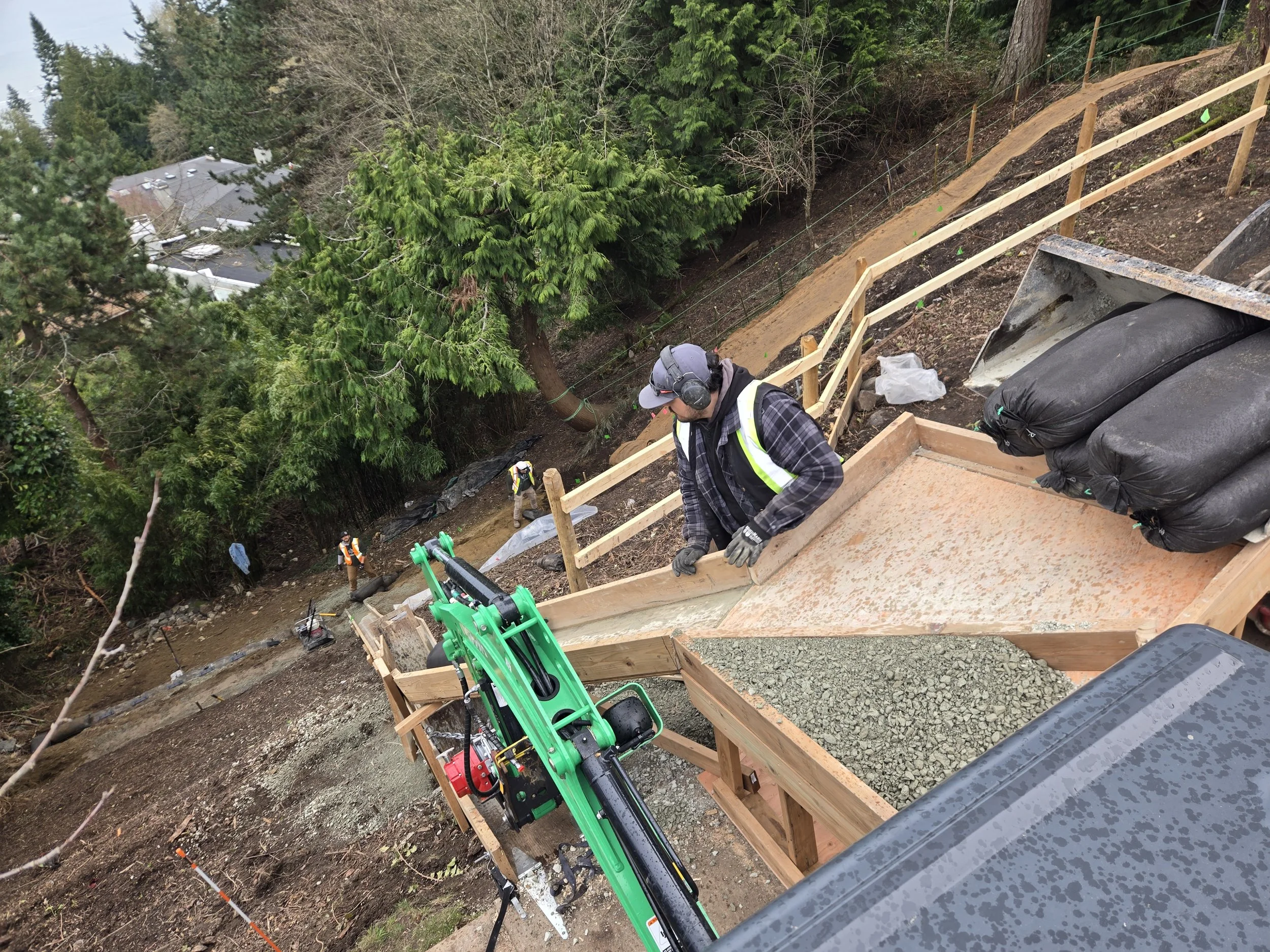
A purpose-built transportation system connected the material staging area with the active construction zone.
When the Original Plan Met Reality
Our initial design worked well as a starting point, but construction revealed opportunities for improvement.
For example, the sled was originally designed primarily for Flex MSE bags.
However, we also needed to transport substantial quantities of loose drainage aggregate.
Gravel behaved differently.
It scattered, accumulated against barriers, and created problems with the sled's original unloading gate.
Rather than accepting these limitations, our team experimented.
We introduced side barriers, tested different sliding surfaces, and repurposed available materials—including leftover vinyl flooring and flexible plastic from children's sleds.
The latter proved particularly effective.
We also replaced the original hinged unloading gate with a simpler wooden panel that could be lifted to control gravel discharge.
The improvement came from simplifying the design, not making it more complicated.
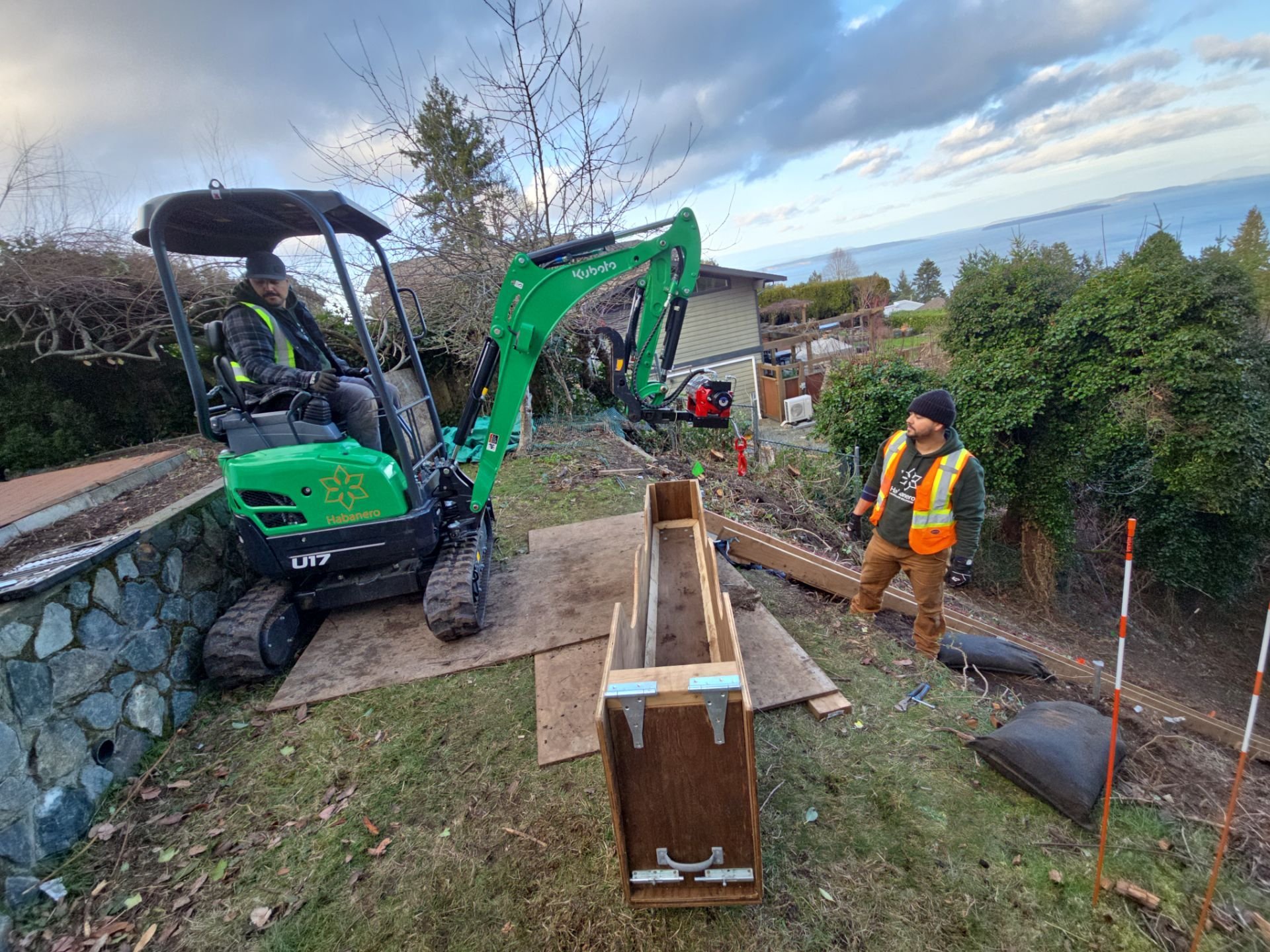
Original sled gate.
Improving the Workflow
Another lesson emerged from how we organized the work.
Initially, the lower crew frequently alternated between receiving materials and building terraces.
After several days, we recognized that constant task switching created unnecessary interruptions.
We adjusted the process by dedicating periods to receiving and staging materials, followed by focused construction activities.
The team also adapted responsibilities according to immediate needs.
Workers rotated between unloading, material transportation, and terrace construction. When material deliveries weren't required, the upper operator could assist with construction.
As work progressed, we shortened the modular ramp to reduce transportation distances.
And the sled became a two-way transportation system: delivering materials downhill while also carrying wood, rocks, and debris uphill for removal.
These improvements weren't all anticipated during planning.
They emerged because the team understood the objective and had the flexibility to improve the process.
Our lesson: Lean helped us identify unnecessary effort. Agile Thinking enabled the team to adapt and improve how work was performed.
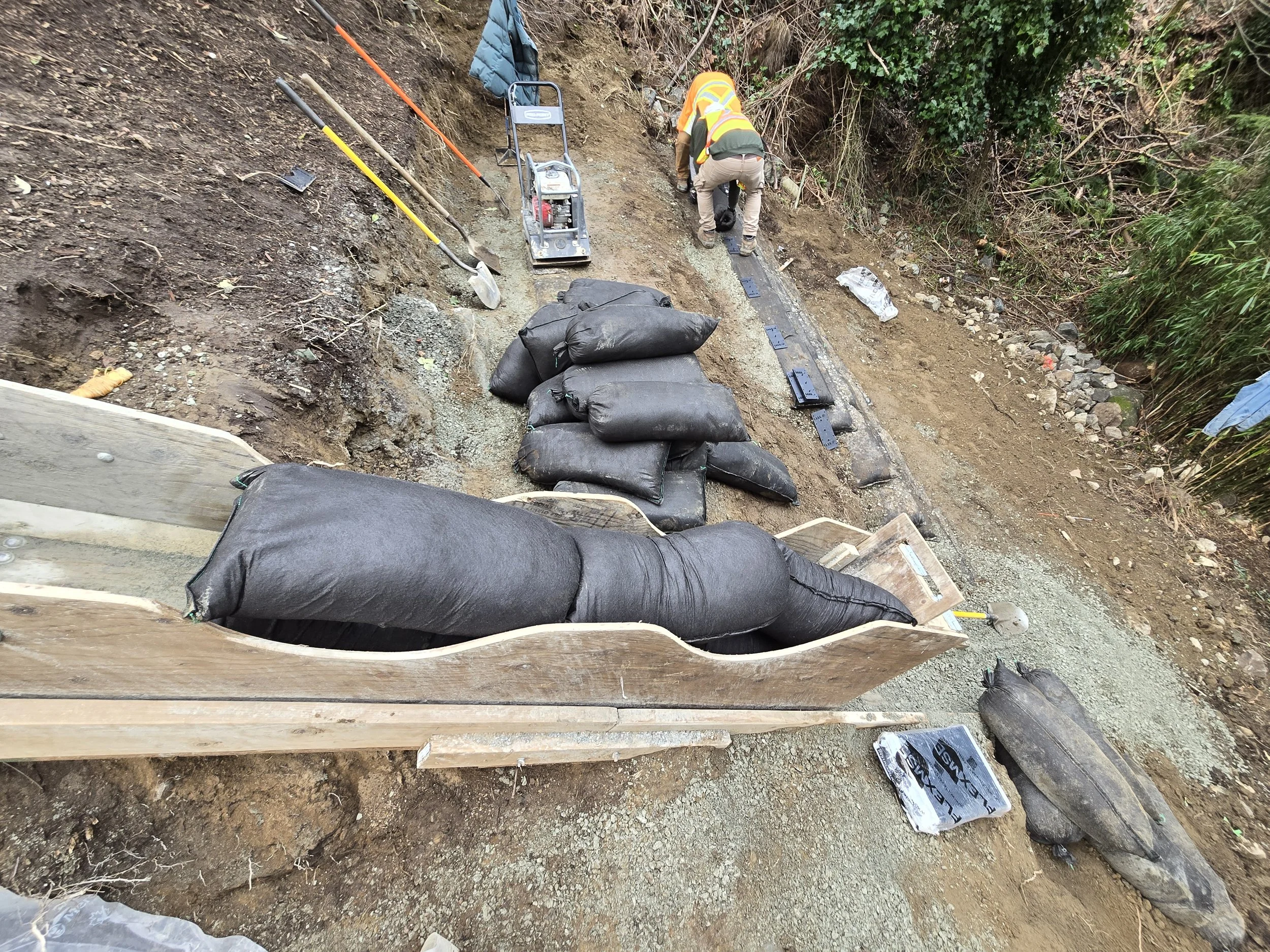
Revised wooden panel, and gravel transportation.
Managing Complexity: Project Management & Change Management
Improving material transportation was only one part of the project.
Georgia Park Terrace also involved technical uncertainty, specialized contractors, procurement dependencies, evolving requirements, and homeowner expectations.
This required disciplined project management.
Throughout construction, we needed to balance four interconnected constraints:
Scope. Schedule. Budget. Quality.
A decision affecting drainage could influence material quantities, construction sequencing, cost, and long-term performance.
A change involving specialized installations could affect procurement and subcontractor coordination.
Managing these dependencies required us to consider the project as a whole.
When Conditions Changed
During construction, we encountered pre-existing ground conditions that required additional drainage and preparation measures, including importing substantial quantities of clear crushed aggregate beyond our original assumptions.
These conditions contributed to a financial deviation of approximately 8% from the original project baseline.
Given the complexity of the site and the challenges encountered, we considered this deviation manageable.
But the percentage alone doesn't tell the full story.
What matters is how we managed the situation.
Our approach was to identify emerging risks, communicate their implications, investigate possible solutions, and return with recommendations.
For significant decisions, we treated the homeowners as the project's steering committee.
We didn't expect them to solve technical construction challenges.
Instead, we took responsibility for investigating alternatives and presenting a recommended path forward.
Every recommendation needed to consider its implications for scope, schedule, budget, and quality.
Good project management doesn't mean preventing every deviation. It means recognizing uncertainty, evaluating alternatives, and maintaining accountability when plans must change.
Five Change Orders: Managing More Than Paperwork
Throughout the project, we managed five formal change orders.
Some addressed technical requirements and site conditions. Others reflected opportunities for landscape enhancements or evolving homeowner preferences.
Each required more than documenting an adjustment.
We needed to build understanding, maintain alignment, coordinate implementation, and sustain momentum.
Our approach reflected several established change management principles.
Build buy-in. Engage homeowners in meaningful decisions and explain the reasoning behind recommendations.
Empower action. Ensure the team and specialized contractors understand approved changes and can implement them.
Generate short-term wins. Demonstrate progress through completed terraces and resolved construction challenges.
Sustain momentum. Maintain communication and continue addressing emerging constraints.
Make change stick. Incorporate approved decisions into procurement, scheduling, and construction activities.
Trust was essential.
We emphasized empathy for the homeowners' concerns, authenticity in our communication, and clear logic behind our recommendations.
Consistency and follow-through helped reinforce that trust.
The distinction became clear:
Change control establishes what has been approved. Change management helps people successfully navigate and implement that change.
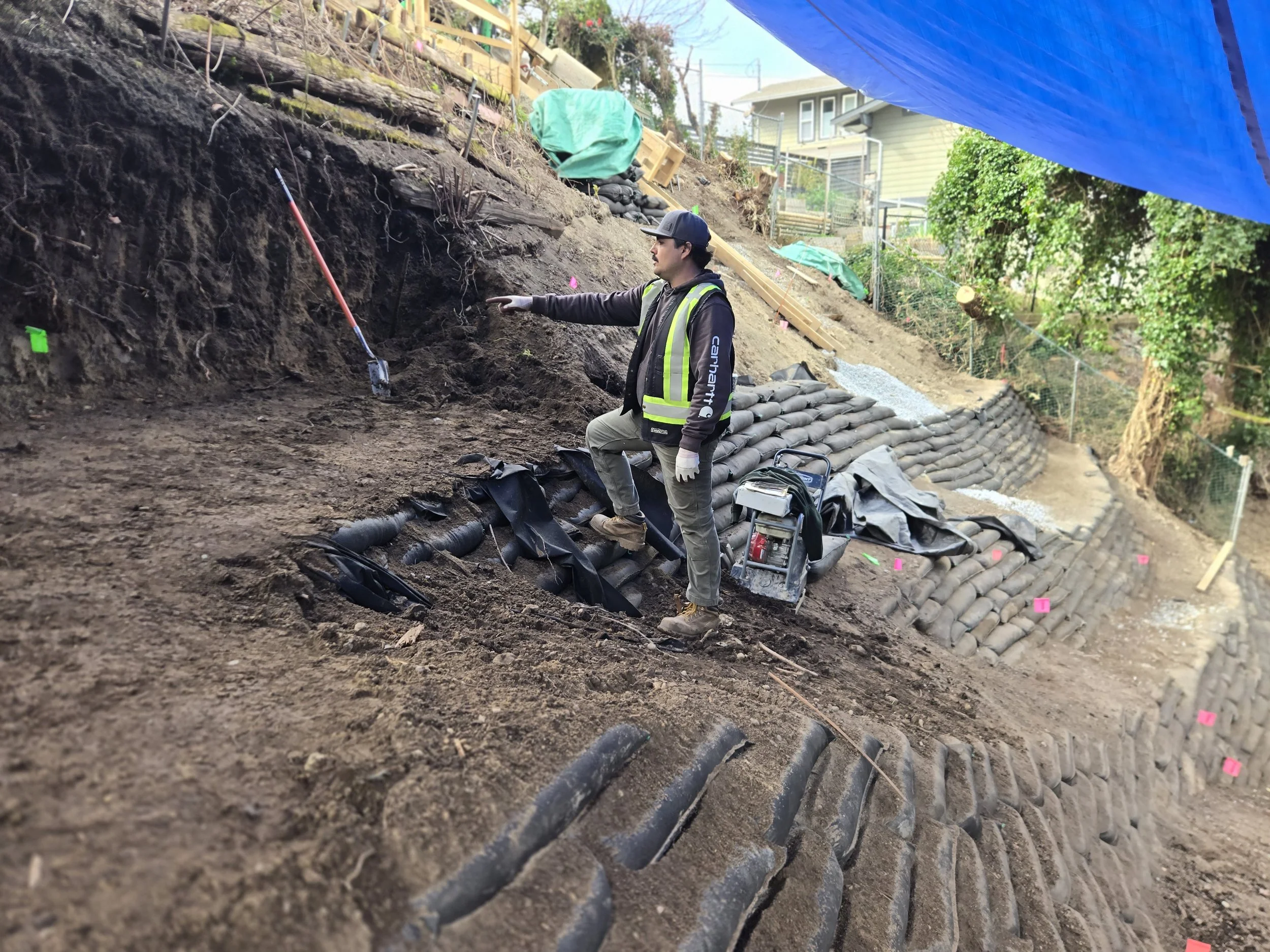
Work in progress.
Leadership & Collaboration: Building a High-Performing Delivery Network
One of our most valuable lessons was that a high-performing construction team doesn't necessarily need to be large.
It needs direction, capable people, the right resources, and effective collaboration.
At Georgia Park Terrace, our leadership role was to establish the operational foundation, coordinate resources, and provide a clear direction.
But we didn't want every field decision to depend on management.
We wanted the team to understand the objectives and have the confidence to identify problems, propose improvements, and adapt.
The transportation system illustrates this approach.
We established the original design and operating concept.
The team made it better.
Leadership also extended beyond our employees.
The project required collaboration with a substantial network of technical specialists, subcontractors, suppliers, and equipment providers.
Contributors included Flex MSE, Ryzuk, ICONIX, Top Tile BC Service, Modern Edge, Farm to Garden Organics, Michell Excavating, Sunbelt Rentals, United Rentals, SiteOne, Slegg, and others.
Their roles varied, but their contributions needed to be coordinated within a shared project schedule and set of objectives.
This was not always straightforward.
External stakeholders have their own schedules, priorities, constraints, and responsibilities.
A supplier's availability can affect construction sequencing. A technical recommendation can influence procurement. A subcontractor delay can affect other activities.
Managing these relationships required communication, negotiation, flexibility, and a clear understanding of project dependencies.
Our lesson: Leadership isn't about controlling every activity. It's about establishing direction, empowering people, and bringing specialized capabilities together around a common objective.
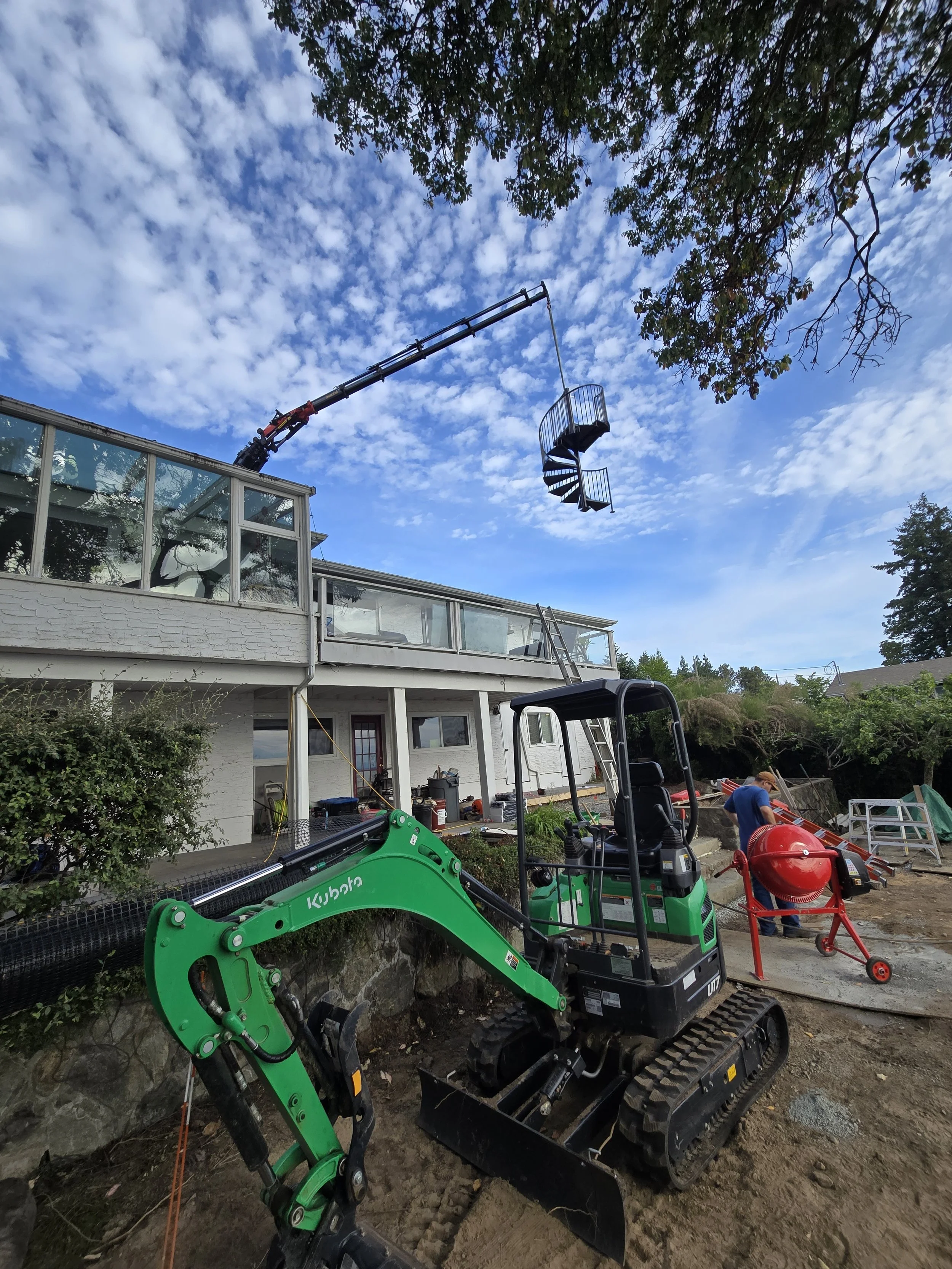
Collaboration with subcontractors.
People & Planet: The Purpose Behind the Process
Efficiency matters.
So do adaptability, project control, and effective leadership.
But at Habanero, we believe these capabilities should serve a broader purpose.
People and planet.
People
Our transportation system reduced the need for repeated manual carrying across a steep slope.
Flexible responsibilities helped the team respond to operational needs while managing fatigue.
Field-led improvements encouraged participation and practical problem-solving.
And structured stakeholder engagement helped homeowners remain informed and involved in consequential decisions.
For us, improving productivity should not simply mean asking people to work harder.
It should mean finding better ways to work.
Planet
The project also required environmental trade-offs.
Importing aggregate, operating equipment, and transporting materials all consume resources.
We don't believe ecological construction means claiming zero environmental impact.
It means understanding those impacts, considering alternatives, and avoiding unnecessary resource consumption wherever practical.
At Georgia Park Terrace, we sought to reduce unnecessary handling, reuse available materials during equipment modifications, and support the construction of a vegetated retaining system designed for long-term landscape performance.
The project's ecological outcomes will continue to depend on vegetation establishment, drainage performance, and ongoing stewardship.
Our purpose isn't separate from project performance. It influences how we define value and make decisions.
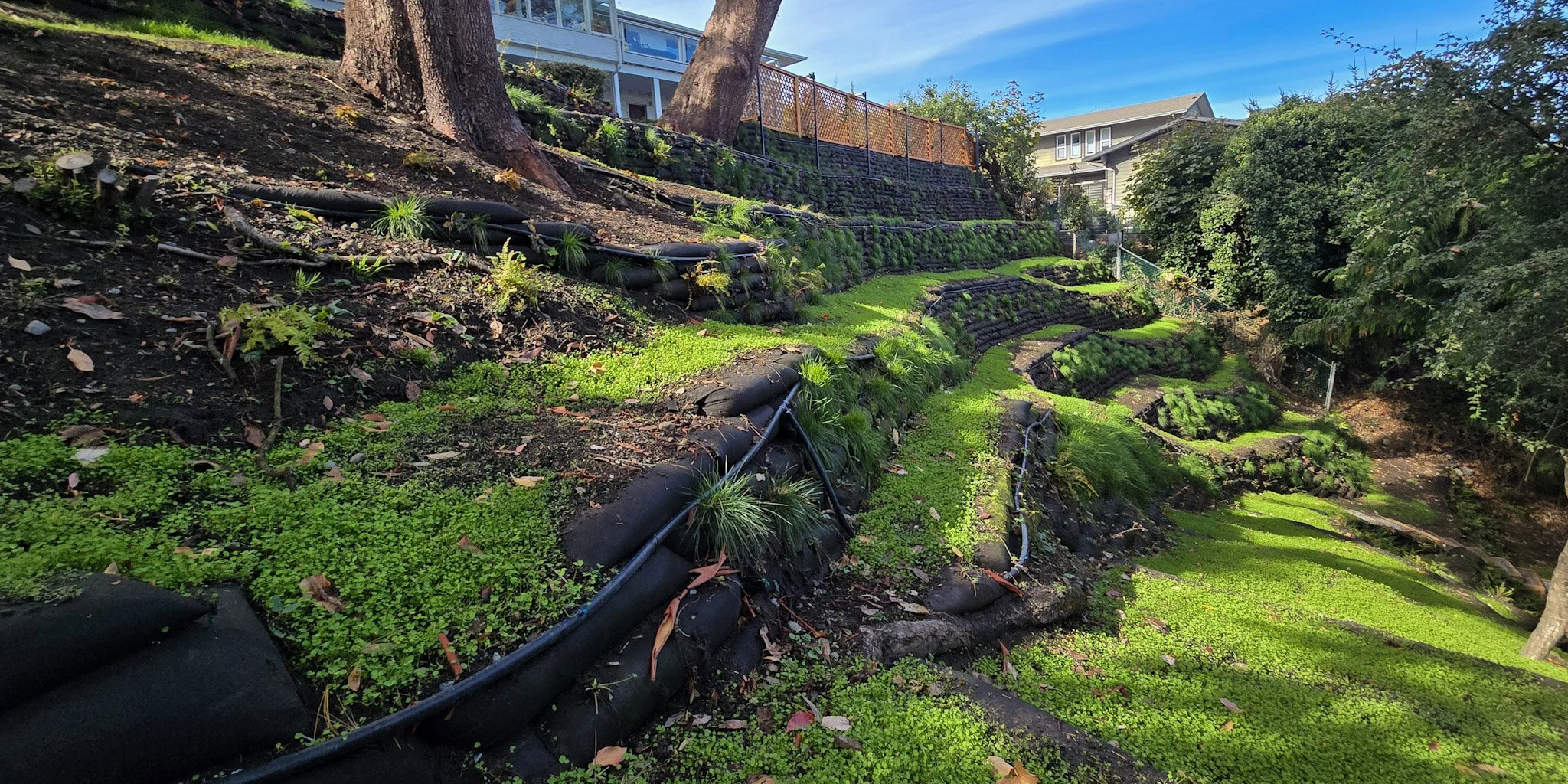
Slope stabilization completed - establishment - growing vegetation
What We Learned—and What Comes Next
Georgia Park Terrace reinforced several lessons that we intend to carry into future projects.
1. Design the entire process, not just individual activities.
The transportation system worked because the Dingo, receiver, ramp, sled, winch, and construction crew were considered as parts of one connected operation.
2. Give capable teams the foundation and flexibility to improve.
Several of our most practical improvements emerged from field experience rather than the original design.
3. Manage uncertainty through informed decisions and stakeholder engagement.
Unexpected conditions and changing requirements are part of complex construction. Transparency, technical investigation, and structured decision-making help maintain accountability and trust.
4. Think beyond the boundaries of the organization.
Effective delivery depends on coordinating specialized expertise, suppliers, subcontractors, and other stakeholders—not simply managing an internal team.
5. Measure what matters and keep learning.
Our transportation calculations helped inform planning, but we didn't collect comprehensive production data throughout every stage. Future projects offer an opportunity to improve how we measure performance and evaluate outcomes.
These lessons have encouraged us to explore whether established management principles can form a more integrated approach to complex landscape work.
We're not claiming to have developed a new methodology or discovered the ideal way to deliver projects.
Instead, we're applying critical thinking, drawing on proven knowledge, and reflecting on our experience.
Georgia Park Terrace is one case study.
Future projects will challenge our assumptions, introduce new constraints, and reveal additional opportunities to improve.
And that's precisely what interests us.
At Habanero, innovation isn't about having all the answers. It's about asking better questions, learning from experience, and continuously exploring how we can create better outcomes for people and planet.
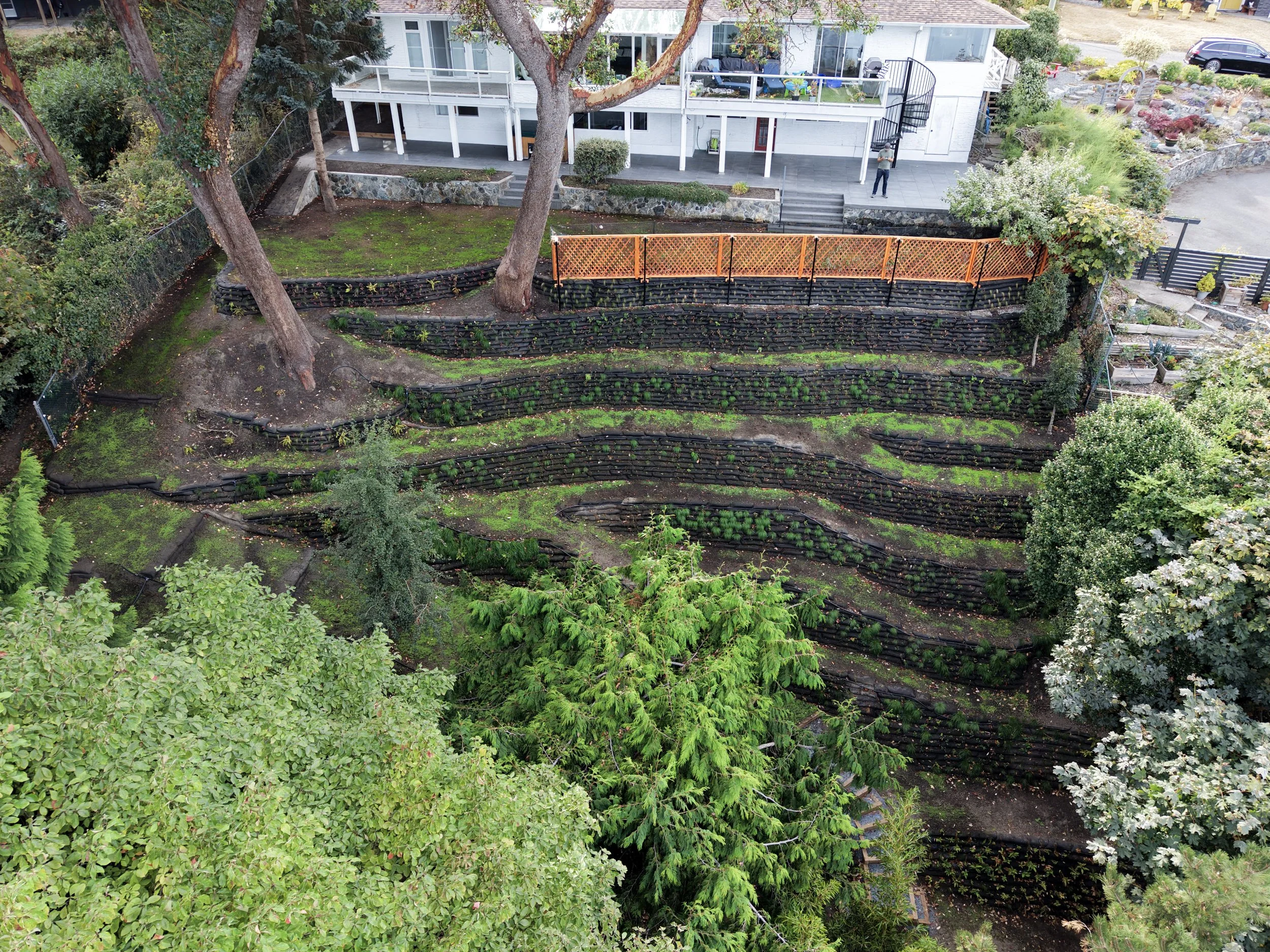
Slope Stabilization Completed - Georgia Park Terrace
About Habanero Landscape Solutions
Habanero Landscape Solutions is a Greater Victoria-based company specializing in ecological landscape care, restoration, and complex landscape projects.
We combine practical field experience, technical collaboration, and thoughtful project management to develop solutions that respond to the needs of each site.
Landscapes for People and Planet.